The Olive Harvest Women of Mani and Crete: How Ancient Work Built Unbreakable Health
In the harsh mountains of Mani and the ancient island of Crete, the women who harvest olives have built bodies and minds of iron. Their secret is not a gym or a pill. It is a way of life older than Rome.
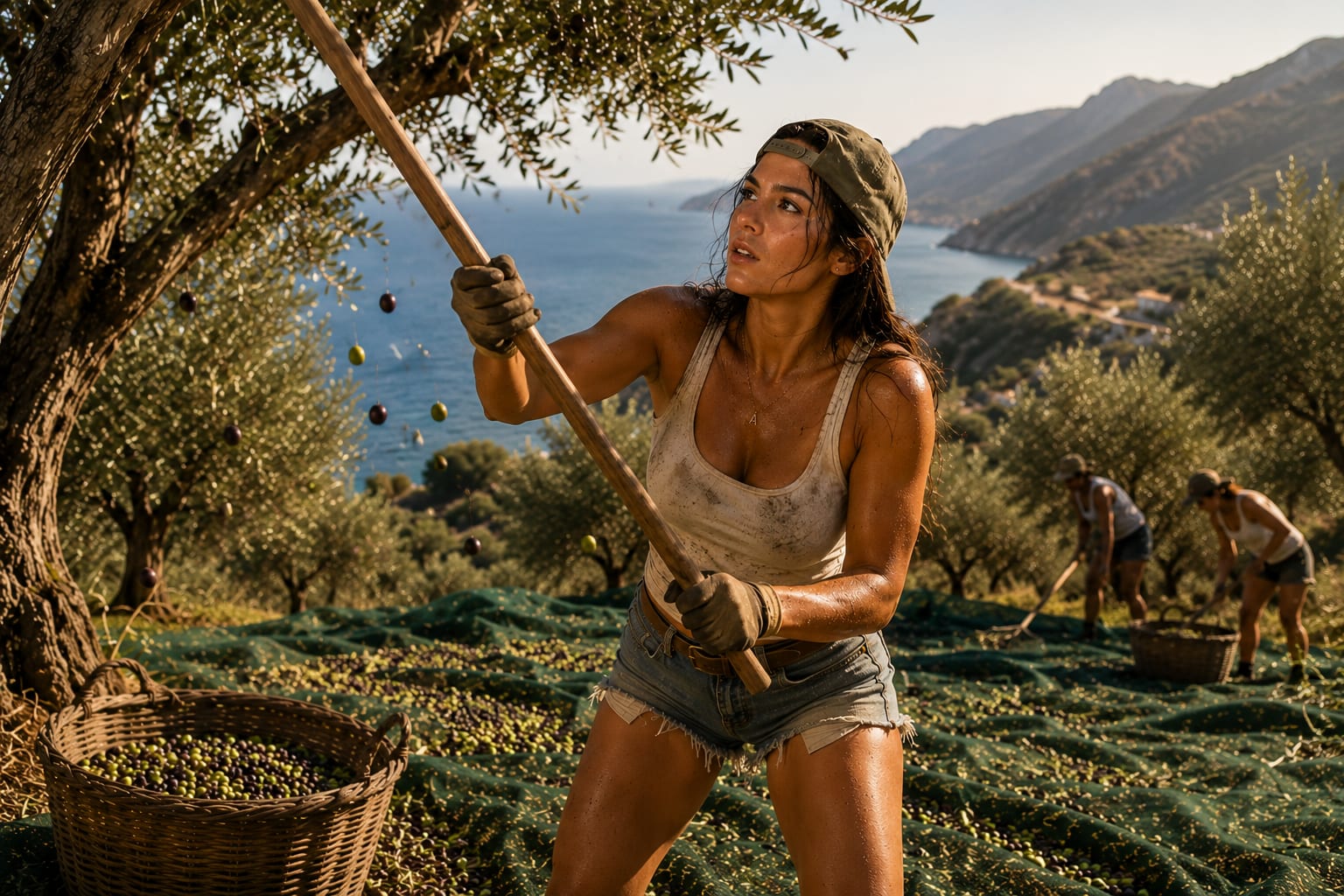
The women of the Mani and Crete do not go to the gym. And yet at eighty years old their hands are stronger than yours, their hearts beat slow and steady like a bell, and their minds are sharp enough to cut you in half with a single word. 🫒
These women climb the silver olive trees before the sun wakes up. They call the harvest o trigos, and it is not a job to them. It is a season of life, like being born or falling in love.
Let me show you something the doctors in America pay thousands to understand.
The Land That Refuses to Be Soft
The Mani is the middle finger of the Peloponnese, a fist of rock and stone that points into the sea. Nothing grows here easily. The mountains are gray and cruel, and the wind carries salt.
Crete is bigger, wilder, older. It is the island where Zeus himself was hidden as a baby in a cave so his father would not eat him. Yes. Eat him. The gods here were never gentle.
In this land, softness dies young. Only the strong grow old. And the women grow oldest of all.
When they harvest, they spread nets beneath the trees and beat the branches with long sticks. The olives rain down like green and black hail. The women bend. They rise. They bend again. Ten thousand times a day.
No trainer designed this. Three thousand years did.
The Secret in Their Blood
Here is a word that only a Greek can give you fully: meraki. It means to do something with so much love and soul that a piece of you is left inside the work.
These women pour meraki into every olive. They do not rush. A bruised olive makes bitter oil, so they treat each fruit like a tiny life.
Their olive oil is liquid gold. The good stuff, the first press, they call it agourelaio, the oil of the young unripe olives. It burns your throat a little when it is fresh. That burn is the medicine. That burn is life.
They eat it on everything. Bread. Beans. Wild greens they pick from the mountainside called horta. Spoonfuls straight from the bottle like it is nothing.
And their hearts? Strong as marble. Their arteries clean as a mountain river.
Why They Live Forever
Crete is one of the places on Earth where people forget to die. Scientists came here confused, holding their clipboards, asking the old ones their secret.
The old women just laughed and offered them a plate of food.
They walk everywhere, up hills that would break a young American man.
They eat what the land gives, nothing from a box.
They nap in the afternoon without guilt.
They sit with neighbors for hours and talk and argue and sing.
That last one matters more than the rest. Loneliness kills faster than bacon. These women are never alone. The whole village is their family, whether they like it or not.
They have a saying: Kali parea. Good company. To share a table, a bottle of oil, a fight, a laugh. This is the true vitamin.
The Mind of Iron
Do not think their strength is only in the body. Their minds are fortresses.
A woman of the Mani buried three husbands and two sons, and still she wakes at dawn to beat the olive trees. When asked how she carries such sorrow, she said something that would silence a philosopher:
"The tree also loses its fruit every year. And every year it makes more."
Filotimo. This is the greatest Greek word of all, and there is no English match. It means the love of honor, the deep pride of doing right, of being of use, of never being a burden. It lives in these women like fire in a stove.
They do not sit and wait to be cared for. They care. They give. They work. And the working keeps the darkness away.
What the Olive Trees Know
Some of these olive trees are two thousand years old. They were alive when Rome was young. And they still give fruit.
The women see themselves in the trees. Twisted by wind. Scarred by lightning. Bent by time. And still standing. Still giving. Still alive.
The Greeks had a word for human flourishing: eudaimonia. It does not mean happy in the cheap American way, all smiles and no depth. It means a life lived fully and well, with virtue, with struggle, with meaning.
These women never read the philosophers. They simply are the philosophy. They live it in their aching backs and their loud laughs and their gold-filled bottles.
Somewhere far away, a person sits in a soft chair, ordering food to a door, scrolling a glowing screen, feeling tired though they have done nothing all day.
And in the Mani, an eighty-year-old woman climbs a tree older than Christ, fills her basket, and walks home singing.
The tree will lose its fruit this year. And next year it will make more.